A Remedy for WitchTok Drivel
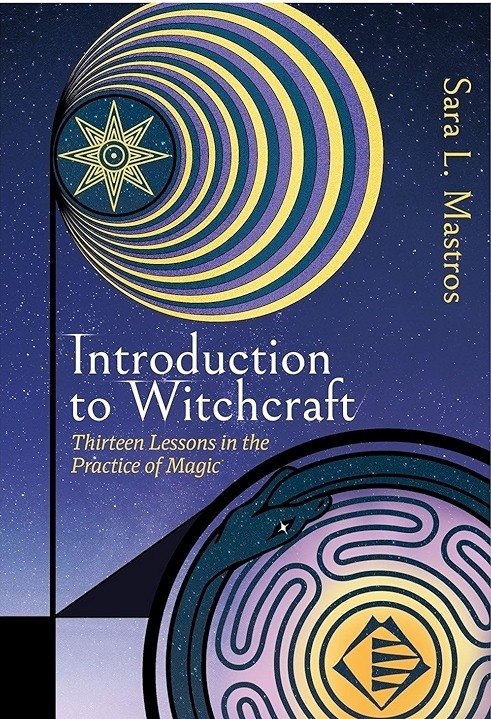
Sara L. Mastros’ Introduction to Witchcraft is one of the rare books in this genre that doesn’t show up dressed like wisdom while secretly being a sack of scented filler. It has substance. It has structure. More importantly, it has the unmistakable signature of someone who has actually lived the material rather than merely arranged it into a marketable occult aesthetic for the spiritually bored and theatrically self-impressed.
This is not witchcraft as décor. Not witchcraft as identity cosplay. Not witchcraft as a curated fog machine for people who confuse mood with depth. Mastros presents the craft as what it actually is when stripped of the glitter and hormonal social-media mysticism: a lived, adaptive, psychologically potent, symbolically intelligent practice rooted in will, imagination, relationship, discipline, and transformation. In other words, the real thing—or at least something honestly trying to be.
And where she really plants the flag is in her framing of witchcraft as a crossroads practice. That lands because it is true. The craft has always belonged at the threshold—between categories, between worlds, between what is permitted and what is possible. It belongs to the outsider, the heretic, the exile, the deviant, the unclassifiable, the spiritually disobedient, and every other bastard who has had to learn how to generate power from the margins while the center plays dress-up in respectability. Mastros understands that witchcraft is not born from comfort. It emerges from friction, liminality, contradiction, and the refusal to remain spiritually housebroken. That alone gives this book more philosophical legitimacy than most of the cotton-candy occultism choking bookstore shelves.
Another thing in its favor: it does not insult the reader by substituting vague affirmation for actual instruction. There is an epidemic in modern witchcraft publishing of books that say nothing in a soothing tone and call that insight. Endless recycled sludge about intuition, intention, alignment, and “your journey,” as if stringing together soft-focus abstractions somehow constitutes an education. Mastros largely sidesteps that trap. She pushes practice. She pushes observation. She pushes journaling, experimentation, and the deeply underrated discipline of tracking what actually happened instead of emotionally narrating what one hoped happened.
Her treatment of the magic journal is one of the clearest examples of that seriousness. This is where the book quietly separates practitioners from dabblers. Record the operation. Record the conditions. Record the variables, the outcomes, the oddities, the failures, the delayed effects. Build a body of evidence. Build a relationship with your own process. Because if you are not documenting your work, there is a decent chance you are not practicing magic so much as romanticizing your own internal weather and calling it revelation. Mastros, to her credit, seems far more interested in functional development than in helping people feel special for owning a black notebook.
Her emphasis on having a real co-magician is another point where the book shows uncommon maturity. Solitary work has value, yes—but solitary work also gives people infinite room to disappear into unchallenged fantasy, private symbolism, and self-confirming nonsense. Another practitioner can sharpen you, check you, refine you, expose blind spots, pressure-test your assumptions, and turn magical work from a self-referential monologue into an actual discipline. A serious co-magician is worth more than another dozen books written by people who can describe incense in six adjectives but cannot teach operational clarity to save their lives.
Chapter One, “A Spell Is a Wish the Will Makes,” is especially strong because Mastros has the nerve—and the intelligence—to treat imagination as an operative faculty instead of something to be apologized for. That matters. Imagination is not a decorative side effect of magic; it is one of its engines. Symbolic immersion, make-believe, role-play, deliberate entry into the imaginal state—these are not childish embarrassments to be hidden under more respectable language. They are technologies of engagement. Most people sabotage themselves before they begin because they are too inhibited, too self-conscious, too addicted to appearing rational to let the deeper layers of mind do their work. Mastros seems to understand that the gate often opens through play long before it opens through theory.
The same practical intelligence shows up in her treatment of sympathetic magic. She does not flatten the subject into that modern occult cop-out where everything gets reduced to “intention,” as though the mere presence of desire somehow absolves a practitioner from needing method. Intention without structure is just wishful thinking in ceremonial makeup. Mastros gets into similarity, contagion, correspondences, links, and the logic of transmission in a way that gives the reader an actual framework for thought and action. Not just a vibe. Not just mystical perfume. A framework. That distinction is not small—it is the difference between a practitioner developing skill and a dabbler having a themed emotional experience.
The broader architecture of the book is solid as well. Divination, symbols, circles, cleansing, protection, trance, dreaming, planetary currents—it covers real territory, but it does not feel like an occult yard sale where the author dumps every shiny object they’ve ever touched onto the table and hopes quantity masquerades as depth. There is continuity here. There is sequence. There is the sense that Mastros is not merely presenting material, but attempting to initiate competence. That is a higher standard than this genre often manages.
And I would be remiss not to mention one of the more grounded strengths of the book: she acknowledges magical hangovers and overextension like a sane human being. Good. Because too much occult writing behaves as though every working should leave one glowing, empowered, and ready to ascend a moonbeam in curated silk robes. In reality, serious work can leave a person tired, wired, dehydrated, emotionally wrung out, mentally scattered, or energetically flattened. That is not a defect in the craft. It is a reminder that the practitioner is a whole organism, not a floating Pinterest board with a wand. Mastros treats rest, hydration, grounding, and recovery as part of the work—which is practical, honest, and frankly more responsible than a lot of authors in this space deserve credit for being.
So the blunt assessment is this: Introduction to Witchcraft is worthwhile because it respects both the craft and the reader. It has enough intellect to avoid shallow mystic branding, enough practicality to avoid disappearing into abstraction, and enough lived texture to avoid reading like a hollow occult content mill. It does not pretend witchcraft is neat, sanitized, or easily reduced to a consumer identity. It presents the work as layered, imaginative, demanding, and alive.
If you want a beginner-accessible witchcraft book that still has blood in its veins, this one is worth your time. If you want another glossy manual for people who think “shadow work” means photographing their sadness next to an overpriced candle and calling it initiation, there is no shortage of those elsewhere.
Mastros brought craft. A lot of this genre brings accessories.
Some thoughts…
-Adam